Pet-Friendly Fencing: Fence Companies Melbourne Tips and Materials
Pet proprietors in Melbourne often tend to think about secure fencing for one factor: keeping the canines and cats secure, and maintaining the garden intact. What lots of people find after the very first fence upgrade is that "pet-friendly" is not a single attribute. It is a mix of elevation, spacing, product habits in climate, gateway style, and how your pet actually moves via the world.
I have actually seen the difference between a fence that looks right on day one and one that carries out months later, after UV, rainfall, and the little behaviors your pet establishes come to be noticeable. A solid, well-chosen fence can additionally reduce your stress and anxiety. You invest much less time inspecting voids, fewer late-night "where is he currently?" minutes, and more time delighting in the yard as opposed to managing it.
This overview is created keeping that reality in mind, with useful advice that I would expect from real fencing trades and the kind of input you would get when you speak with fence companies Melbourne.
Start with your pet's "retreat route," not your postcode
Before picking products, watch your pet carefully for an hour on a typical day. Not in the remarkable means, just observe where they hang around, where they test borders, and what they seem obsessed with.
A dog that digs will focus on the bottom. A jumper will certainly focus on elevation and the area on top. A climber will probe horizontal rails and blog post placement. A pet cat will overlook a fence style that would certainly quit a canine, due to the fact that pet cats frequently fix problems differently, particularly in sheltered corners.
Then consider what the fencing requires to stand up to in your lawn:
- Jumping: Exist things they can stand on, like pot plants, containers, or low timber edging?
- Climbing: Do they capture their paws on rails or choose at gaps?
- Digging: Is there loose dirt, compost, or a spot where they already dig?
- Barging gates: Do they perform at the gate when they listen to someone outside?
- Gaps and presses: Can they fit with a slim opening, or under a closed gate?
This is also where the "pet-friendly" concept comes to be measurable. You are not going for a pretty border, you are going for a limit that matches a particular habits pattern.
I once helped a affordable fencing contractors neighbour that had a mid-sized terrier that kept sliding under the fencing line. The fence height was great, but the soil resolved after rain. The pet dog found a constant void along the bottom corner. The solution was not one more panel upgrade. It was resolving the ground clearance and the means the fencing fulfilled the soil, plus strengthening a small area where the pet dog chosen to dig.
Height, spacing, and the components pet dogs exploit
Most fencing failings with animals originated from information that look small. If you want a fencing that stays reputable, concentrate on these stress points.
The top side is where climbers win
Some dogs will certainly evaluate the top by rising and pushing, specifically if there is a friend or interesting smell beyond. If your fence has a style with straight rails, family pets can use those like steps.
This does not indicate every horizontal design misbehaves, it means you need to think of how a particular family pet climbs up. For an enthusiastic mountain climber, a design with less accessible steps generally does better.
The bottom gap is where diggers and squeezers win
A void of even a few centimetres can transform a fencing into an invite, specifically for smaller sized canines and cats. For cats, the obstacle is commonly not elevation but the capacity to slide under or via a void near the ground.
Ground clearance additionally alters over time. Melbourne weather condition brings heavy rainfall days, and soil can shift. Fencing articles might resolve slightly, and lumber can behave in different ways as it weathers. That indicates you need to make for the lengthy video game, not just for the day the specialist finishes.
Gates are commonly the weak link
A fencing might be strong, however a gateway with tiny imbalance can create a space that appears only when it is slightly open or when the latch is engaged imperfectly. Pet dogs additionally find out the "timing" of an entrance, since human beings open and close gateways at constant moments.
If your dog jumps, pay attention to hinges, latch positioning, and whether eviction droops in time. A solid gate framework and well-fitted equipment issue as much as the fencing panels.
Material selections in Melbourne: what holds up, what pets test
Choosing products is not only concerning exactly how it looks. In Melbourne, fencing deals with sunlight direct exposure, rain, moisture changes, and occasionally solid winds. Materials behave in different ways, and your family pet's behavior can speed up wear in particular spots.
Below prevail products people consider when they talk with fence companies Melbourne, with a functional pet-focused lens.
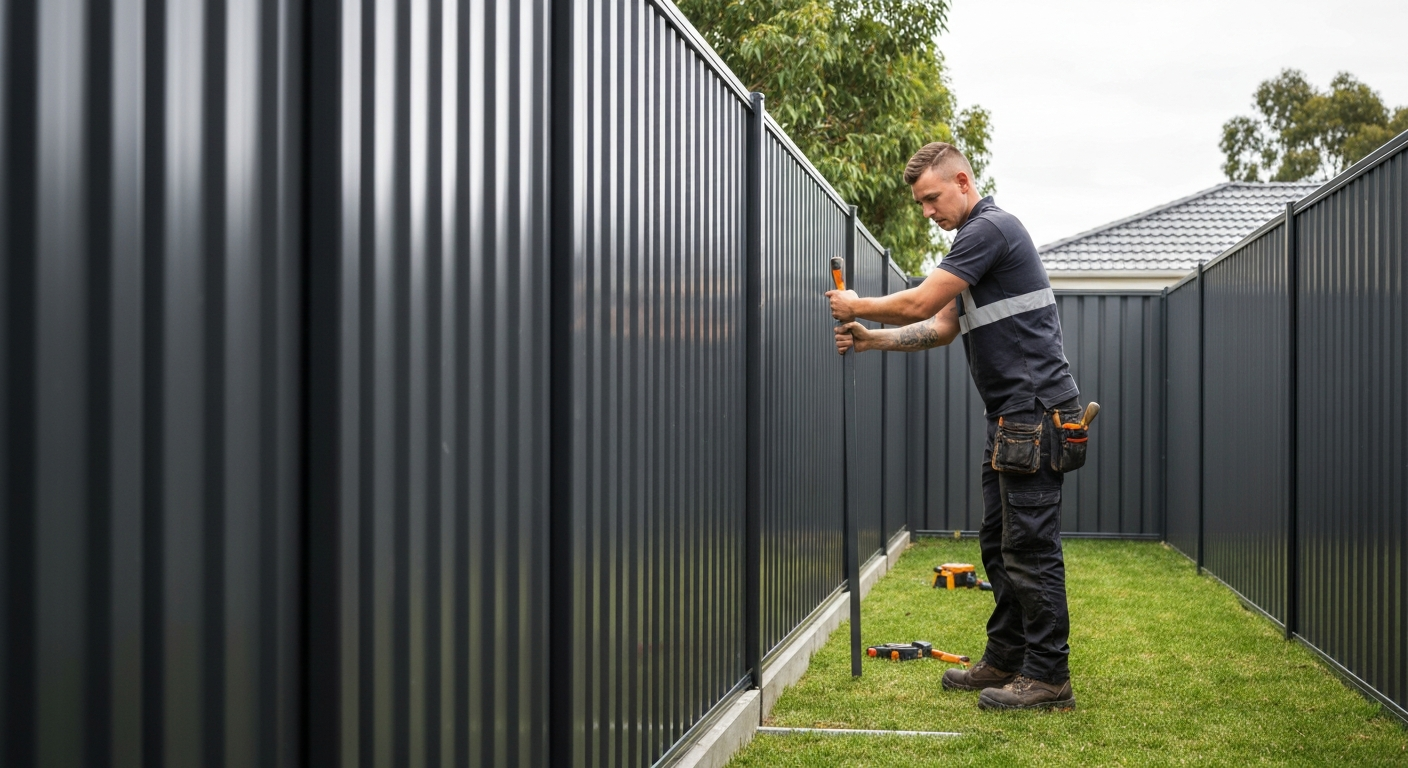
Colorbond steel and metal panel fencing
Metal fencing can be a wonderful option for family pet control due to the fact that it is commonly constant and much less susceptible to bending than wood, depending upon construct quality. It is also long lasting in weather.
For pet dogs, the greatest factor to consider is spacing. If the voids are also wide, small dogs and cats can in some cases press through. If your pet dog is a mountain climber, consider just how the design handles straight accessibility. Smooth surfaces can help, but the genuine concern is whether there are footholds an animal can utilize repeatedly.
The various other functional advantage is maintenance. You can typically clean it with basic approaches, and you are much less likely to handle rot.
The compromise is that metal panels can fume in direct sunlight on some days. The majority of the moment it is a comfort concern for human beings greater than family pets, yet if your pet presses versus the fence, you might see it in the summertime. Preparation shade or growing a barrier can help.
Timber paling and slat fencing
Timber is popular for Melbourne backyards due to the fact that it looks natural and can be budget plan versatile. Timber paling can work well for pet dogs if the boards are close together and the construct is tight.
But wood requires more interest over time. It can reduce, broaden, and weather erratically. Some timber fences also mature quicker near ground level, where moisture remains and where pets might dig or paw.
If you pick wood, look for good installation details: strong post deepness, proper supporting, and board positioning that does not develop inconsistent voids. Likewise consider the parts your family pet will eat or scrape. Some canines will keep testing the very same spot, specifically if they are bored or if there is wildlife nearby.
A hardwood fence can be perfectly pet-friendly, yet it rewards good craftsmanship. Negative spaces and weak entrance frameworks can mess up the whole job.
Mesh and wire systems
Mesh can be efficient for maintaining smaller pets consisted of, yet it depends greatly on spacing and installation. As an example, a mesh fence can be solid for containment, however if it is not tensioned well or if the structure changes, animals may at some point find a weak point.
Some canines regard cable much less than lumber or metal. They might not dig with mesh, yet they can lean right into it, especially if they are eager to communicate. This repetitive pressure can stress an inadequately set up system.
For cats, mesh can be complicated. Cats typically like to climb up, and if there is a structure close by, they might discover a path over. That is why the "family pet's retreat course" issues more than the material alone.
Brick, block, and masonry
Masonry fences are frequently the most persistent choice for climbing up and digging. They do not rot, and a durable wall surface can take care of stress better than several hardwood designs.
The downside is price and the functional fact of developing it. Another concern is that stonework does not stop excavating if the animal digs at the base, because digging can still happen also if climbing is not possible. You might need additional base reinforcement to make certain the ground line remains secure.
If you already have masonry sections, they can be great to combine with various other materials to create a continuous, pet-proof boundary.
Fence elevation is not the only number that matters
When individuals ask me about pet fencing, I generally hear a number first. Height is necessary, but I see too many fencings that meet a height target and still fail.
Pets do not appreciate "typical elevations" as much as they care about:
- footholds (anything near the fence)
- the fencing's top side accessibility
- the bottom void and corner alignment
- how the gate is fitted and aligned
- whether the fencing line runs constantly without prone transitions
So, if you are intending the backyard design, consider clearing the location near the fencing. Move any kind of reduced objects that might come to be tipping platforms. Even a stack of blocks can change a jumper's success rate.
Also evaluate the corners. Corners commonly experience settling, and they can establish mild spaces as the fencing line satisfies the ground.
Gates: build them like you anticipate trouble
A gate is where pets and human timetables clash. A person opens the gate, the pet dog hears it, the pet cat watches, and suddenly every person is learning. If your fence is supposed to maintain an animal in or maintain an additional pet out, eviction requires to be treated as a major limit, not an afterthought.
A couple of real-world gate factors to consider:
First, guarantee eviction framework is rigid. An entrance that twists under stress can create a void at the lock side. Pets can exploit that void quickly, especially if they are excited.
Second, select hardware that stands up to wear. In active households, joints and locks take a beating. If the latch is too simple for a clever pet, you end up with an ongoing trouble that no fencing product can fix.
Third, watch for gate-to-post clearance after installation. Some spaces look acceptable originally yet change as the hardwood dries or as the structure clears up. If a canine can obtain a paw into a room, they can usually broaden it with time.
If you are handling a specifically identified pet, talk directly with your installer about exactly how they take care of sag in time. Ask what they suggest for your gateway span and just how they intend to prevent positioning drift.
Foundation and ground-line information that make or break pet fences
If you remember only one classification, make it this one. Many "animal getaway" events are not about climbing at all. They have to do with the bottom line.
Ground-level troubles turn up in a couple of common means:
In Melbourne, rainfall can soften and change dirt. That can create a void under the fence line. Likewise, if compost is stacked versus the fence, it can encourage digging. Some animals additionally dig to bury playthings or to locate cooler soil.
An excellent installment addresses the base in such a way that suits your yard. Depending upon the fencing kind, installers might utilize various approaches to protect the bottom side and decrease undermining.
If your family pet already digs, you might require additional reinforcement beyond a basic fencing construct. Some proprietors add an obstacle at the base or readjust the boundary so there is less incentive to dig in the starting point. Also after that, you should pair it with training or enrichment, because fencing alone hardly ever addresses boredom.
Training and enrichment: the fence becomes part of a system
A fence is a boundary, however it is not a total solution for behaviour. Most get away efforts occur since a family pet is encouraged, curious, or bored.
For pet dogs, consistent regimens and psychological stimulation decrease fence-testing. For instance, a canine that obtains an everyday smell walk and routine play often tends to spend less time focusing undecided line. If the canine is still stressed, it typically implies the pet dog is responding to something beyond the fence, like another animal, food smells, or constant noise.
For felines, enrichment matters too. A pet cat that can perch safely inside typically makes use of the inside options as opposed to trying to find courses outside. If your cat is a climber, a cat-friendly indoor perch and window regimen can decrease fence stress.
I when saw a backyard where the fence was mounted well, but the dog still maintained charging the gate at the exact same hour daily. When the proprietor readjusted the regular, the fence testing stopped. The fence had actually done its job, the canine simply needed a various pattern.
Weather direct exposure and maintenance: prepare for the lawn in 5 years
Pet fencings must mature with dignity, and that implies taking into consideration just how you will certainly preserve them.
Timber fencings might require periodic maintenance, including inspections for board alignment, bolts, and very early rot at susceptible places. Metal fencings may require cleaning and, sometimes, touch-ups if damages occurs.
A practical routine that conserves cash: do a fast check after significant tornados. Search for:
- new gaps along corners
- fence line sections where posts might have changed slightly
- gate latch involvement and hinge wear
- any boards that have actually ended up being loosened or raised
Also check the base after heavy rain. If you notice dirt removing at a corner, treat it early. Small changes can turn into larger gaps since pets locate the simplest openings.
When you need a consolidated strategy
Not every backyard is one trouble. Many yards are two or three problems at the same time. An usual circumstance is a pet that both jumps and digs, plus a gateway that swings slightly after windy weather.
Another common one is a feline that suches as the fence line, plus a pet that barks at passers-by via the voids. In these instances, "one material" reasoning can fail. You might require to integrate a solid section to withstand excavating and a different section that manages climbing paths.
I have actually assisted owners map out the border by recognizing the details areas where their pet dog connects most. Typically, just a component of the fence line requires the most durable upgrade. The rest can be maintained within a basic style, as long as the base and gateways are taken care of correctly.
Questions to ask fence companies Melbourne before you sign
You want responses that reveal they have set up pet-proof fences before, not common brochures. A good installer will discuss details, not just materials.
Here is a list of concerns that tends to reveal whether they comprehend pet practices and yard facts:
- What spacing and top-edge design do you suggest for my pet dimension and climbing up style?
- How do you protect against lower spaces creating after soil motion or seasonal settling?
- What gateway hardware do you use to decrease droop, imbalance, and lock failure?
- Do you provide a pet-safe installation strategy for corners and shifts where spaces commonly form?
- How typically should I examine or keep the fence based upon the product you propose?
Pay attention to just how they address. If they concentrate just on "it fulfills the typical height," and overlook bottom clearance, edges, and entrance fit, you are most likely to get a fencing that looks right yet does not stay correct.
Practical material matching by pet dog type
People typically request for a straight referral, and I get it, since decision fatigue is genuine. Still, the very best approach is matching fencing qualities to the pet's most likely behaviour.
A rapid way to consider it:
- If your canine is a digging specialist, prioritise the base line and support at ground degree. Also the strongest wall can stop working if an animal weakens it.
- If your canine is a climber, focus on top-edge access and prevent styles that provide grips. Additionally maintain tipping things away.
- If your family pet is a squeezer (small dog or cat), prioritize marginal voids and a bottom line that does not move after rain.
- If your pet dog is a gate-focused runner, treat the gate as a major structure, not an additional one.
This is why individual monitoring beats common suggestions. The product is very important, however the practices match is what figures out whether you quit replacing repairs.
Common errors I have seen in Melbourne backyards
After viewing sufficient installs, you start to see patterns. Some have to do with spending plans, others concerning assumptions.
One frequent error is selecting a fence height without addressing leading gain access to. A fence might be high sufficient, but if you position a yard attribute next to it, you offer the animal an easy platform. In a Melbourne yard, that may be a stack of blocks from a current task, a wheelbarrow left near the line, and even a low planter you forget about for a week.
Another mistake is ignoring the gate. People will certainly take note of fence panels, after that select a lighter gateway or one with hardware that is most likely to loosen up. Dogs and pet cats do not care just how the gate looks. They care whether it stays safe after duplicated interactions.
Finally, some people assume wood will certainly remain secure. Timber can be stable, however it depends upon the quality, setup, and recurring maintenance. If you do not evaluate and fix tiny issues early, a fence can slowly develop a space that ends up being a habit path for your pet.
A fast planning check prior to mount day
If you are arranging an upgrade, it helps to do one calm check prior to the professional arrives.
You want to line up the fence design with your real backyard things and your pet dog's routes. Here is a small pre-install checklist you can make use of without transforming your life right into paperwork:
- Walk your fence line and note where your pet rests, digs, or jumps.
- Mark any kind of stepping things near the limit, consisting of bins, planters, and piles of materials.
- Check the existing gateway location for shutting alignment and any areas that already feel loose.
- Confirm where the fencing meets the ground in corners, along inclines, and near yard beds.
- Decide whether you need a support approach at the base for your animal's digging habits.
This is also a good moment to consider whether you desire complete containment in all areas or whether you can reduce direct exposure by adjusting the backyard design, like repositioning yard functions or including interior task spaces.
What "pet-friendly" appears like after six months
A pet-friendly fence is not nearly whether it quits the first day leaves. After months, you desire:
- consistent gaps that do not sneak wider
- gates that close correctly without twisting or sagging
- corners that stay protected even after damp weather
- no continuous repairs that become part of the household routine
In Melbourne, that perseverance issues because winter season rainfall and summer season sunlight can disclose weaknesses. If you check when after tornados and once in the drier months, you will certainly catch early issues, and your fence will certainly stay reliable.
Sometimes the most effective outcome is a fence that does not require interest since it was built with sensible loads and reasonable pet dog behaviour in mind. That is where the worth of seasoned fence companies Melbourne can be found in. The installer should be thinking about settlement, base security, gateway alignment, and exactly how pets communicate with the certain geometry of your yard.
Choosing your next step
If you are planning a pet-friendly fencing upgrade, begin with observation, after that match materials and details to your animal's habits. Talk with fence companies Melbourne with particular inquiries concerning bottom gaps, gate hardware, and edge construct top quality. Ask how they handle the components that pet dogs exploit, not simply the components you can picture from the street.
When you get those information right, your fence comes to be something you forget about, in the most effective feasible way. The backyard stays yours, the animals remain safe, and your days return to being around living, not chasing.